
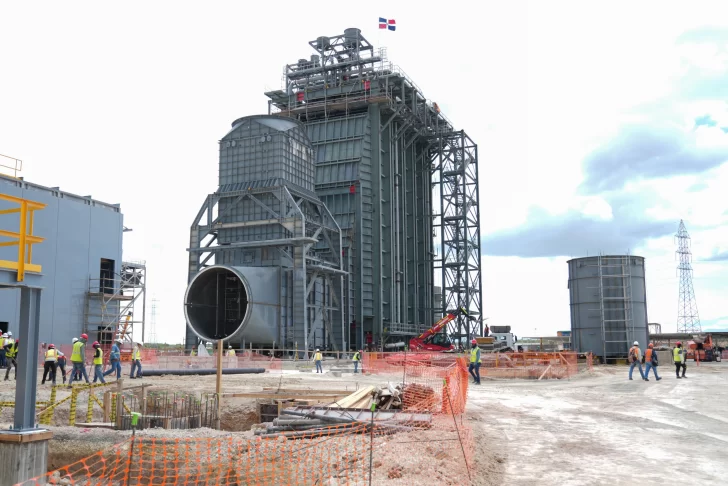
Energía 2000 Project Impacts Affecting Ramsar Wetlands
Mr. Alfredo Quarto
Advocacy Director / Co-Founder
Mangrove Action Project (MAP)
Dear Mr. Quarto,
On behalf of the Centro Bahía de Manzanillo para el Desarrollo Regional (CEBAMDER), I wish to express our sincere gratitude for your distinguished and supportive response to our call for assistance, as well as for the attention and sensitivity that Mangrove Action Project has shown toward the grave situation affecting the municipality of Pepillo Salcedo, in Manzanillo, Dominican Republic. Your message represents an important act of international solidarity at a time when our communities are facing severe environmental, productive, social, institutional, and governance impacts linked to the advance of global gas-energy capital in Manzanillo Bay, a coastal area intimately connected to Ramsar wetlands and protected mangrove ecosystems.
We are reaching out because what is happening in Manzanillo is not simply the construction of energy infrastructure. It is the territorial transformation of a fragile coastal bay and protected wetland area under the pressure of large-scale global energy investment, without proportional restoration, fair compensation, or meaningful safeguards for the communities whose livelihoods depend on the ecological integrity of the bay. At the center of this process is the consortium Manzanillo Gas and Power, formed by Haina Investment, which initially controlled 80 percent of the consortium, together with Shell and ENERLA, to develop the Manzanillo Bay Energy project, which has been publicly linked to investments ranging from US$1.2 billion to US$1.7 billion for a gas terminal and two 400 MW power plants.
For our communities, the effects are already tangible and deeply alarming. More than one hundred artisanal fishers in Manzanillo Bay, together with their families, face the prospect of losing not only the ability to celebrate future Christmas seasons with dignity, but also the possibility of a tangible future. The construction of port infrastructure for the energy plants in the protected area of the Estero Balsa Mangrove Park, within Manzanillo Bay, is disrupting the ecological and economic foundations of local life. As we have publicly warned, without fishing and without ecotourism, local identity begins to fracture; poverty advances; boats remain idle on the shore; and birds and marine species retreat toward healthier environments. The loss is not only economic. It is also cultural, social, and environmental.
A particularly troubling aspect of this case is the pattern of unfulfilled commitments. More than a year and a half ago, Energía 2000 promised the construction of a dock for fishers and a reception center for ecotourism, commitments made during meetings with local representatives, marine guardians, ecotourism actors, and fishing leaders. Those promises were presented as minimum conditions for preserving the way of life of the bay’s communities. Yet they never materialized. What remains is a profound sense that the company disregarded the community’s concerns, devalued its fishing tradition, and frustrated the development of a sustainable ecotourism economy that could have strengthened local livelihoods.
According to community observations and our territorial documentation, the installation of the dock structure in the heart of the bay has already dramatically altered the marine environment. Constant vibrations, intense mechanical pounding, and heavy industrial activity have pushed marine species farther offshore, leaving fishers with declining catches and depriving visitors of the wildlife they once came to observe. Access routes have also been increasingly constrained by provisional and permanent port structures that obstruct navigation, disrupt the ecological balance of the bay, and undermine the economic viability of artisanal fishing. A historic livelihood of the community is being suffocated by imposing infrastructure that does not reflect the needs of local people or responsible visitors seeking an intact coastal landscape.
The outlook for ecotourism is equally devastating. Before the expansion of energy-related works, the bay and the Estero Balsa mangrove system held significant potential for sustainable ecotourism based on observation, conservation, environmental education, and small-scale responsible visitation. That possibility is now rapidly fading. The construction of the dock and plant infrastructure, without adequate environmental safeguards, is degrading the marine landscape, damaging ecosystems, and undermining the authenticity required for nature-based tourism. As the bay loses biodiversity and scenic integrity, ecotourism ceases to be a realistic alternative for community-based development.
We are also gravely concerned about the impacts on the protected mangrove park and associated wetlands. The actions presented by the company as mitigation have been woefully inadequate. The planting of only 86 mangrove seedlings, described as an act of “social responsibility,” cannot be considered serious ecosystem restoration. It is not supported by a comprehensive technical restoration plan, nor does it address the scale of the damage. Such a minimal gesture trivializes the environmental and economic needs of the community while mangroves, wetlands, and marine habitats continue to deteriorate. This is especially troubling in a bay whose wetlands are essential for water filtration, nutrient cycling, habitat protection, and the support of marine life.
The damage extends beyond habitat loss. Earthmoving, improvised workshops, noise, coastal disturbance, and hydrological alteration are affecting wetlands that are vital to the ecological functioning of the bay. This disruption weakens the food chain, reduces water quality, diminishes the availability of food for marine species, and contributes to the decline of fisheries and the collapse of ecotourism. It also increases the risks of harmful algal blooms, habitat fragmentation, chemical contamination, shoreline disturbance, and biodiversity loss. Together, these impacts create a toxic cycle that impoverishes fishers, destroys the ecotourism appeal of the area, and undermines conservation standards in an ecologically sensitive zone.
The social consequences are no less severe. The loss of fishing income pushes families toward food insecurity, while the destruction of ecotourism opportunities removes one of the few development pathways compatible with ecological preservation. This process deepens frustration, uncertainty, and stress among residents who once relied on fishing for daily survival and now no longer know whether their way of life can ever be recovered. In this context, many face the prospect of forced adaptation, precarious informal work, or migration. Far from delivering shared prosperity, the project is increasing vulnerability in a municipality with limited institutional capacity.
Even the promised employment benefits have proven illusory. While the arrival of energy companies was associated with expectations of quality jobs and progress, the local population has largely been left with temporary and low-quality work such as security, cleaning, petty trade, and informal food sales, while more skilled positions have gone to foreign workers or people from outside the region. Despite public discourse around thousands of jobs, the organized society of the municipality was even compelled to request the creation of a local Infotep vocational training center to prepare local labor, a request that was ignored. This has left Manzanillo’s residents relegated to unstable “third-tier” opportunities while enduring long-term ecological and social losses.
For all these reasons, we believe Manzanillo represents a powerful and urgent case of how global gas-energy capital can intervene in a protected coastal and Ramsar-linked territory without ensuring environmental justice, livelihood protection, institutional strengthening, or genuine territorial redress. The scale of the investment contrasts dramatically with the absence of real compensation for environmental destruction, productive displacement, social dislocation, governance stress, and the weakening of local institutions. This is not responsible development. It is a profound asymmetry between the power of transnational capital and the rights of coastal communities whose existence depends on the ecosystems now being altered.
We respectfully ask for your support in helping to bring international visibility to this case through MAP News or any other channel you consider appropriate. We would be honored to submit an article, statement, or action alert for your readership, and we can provide additional documentation, testimonies, and territorial evidence to support publication. We believe international attention is urgently needed to highlight the ecological importance of Manzanillo Bay and the Estero Balsa mangroves, the unfulfilled promises made to fishers and ecotourism actors, and the growing harm being imposed on one of the Dominican Republic’s most sensitive coastal territories.
Thank you once again for your solidarity, your openness, and your willingness to listen. Your support means a great deal to our organization and to the communities of Manzanillo who continue to defend their bay, their mangroves, their livelihoods, and their right to a just and dignified future.
Respectfully,
Frank Valenzuela
President
Centro Bahía de Manzanillo para el Desarrollo Regional (CEBAMDER)