NIGERIA COMMENCES ITS PHASE 2 MANGROVE RESTORATION PROJECT
NIGERIA COMMENCES ITS PHASE 2 MANGROVE RESTORATION PROJECT AS THE OGONI WETLAND IS DESIGNATED A RAMSAR SITE
Nenibarini Zabbey1, Izuchukwu Uche2, Nkuene Sinclair2, Joseph Nkwoji3, Gbaa Nenubari2 Lawrenta Sedi2
1 – Centre of Excellence for Environmental Restoration (CEER), Wiiyaakara, Hydrocarbon Pollution Remediation Project (HYPREP), Rivers State, Nigeria.
2 – Mangrove Restoration Subunit, Environmental Remediation Unit, Hydrocarbon Pollution Remediation Project (HYPREP), 8 Ken Saro-Wiwa Road, Port Harcourt, Rivers State, Nigeria.
3 – University of Lagos (Unilag), Lagos, Nigeria.
Nigeria has concluded the first phase of mangrove restoration in Ogoniland, covering 560 ha of wetlands, and is set to commence the second phase of 438 ha across 7 Ogoni communities. Mangrove restoration in the Ogoni area of southern Nigeria is making a critical contribution to Nigeria’s nature-based response to climate change mitigation and adaptation. The Federal Ministry of Environment’s Hydrocarbon Pollution Remediation Project (HYPREP) is overseeing scalable, community-based, ecologically sound mangrove restoration, demonstrating the feasibility of realizing Nigeria’s nationally determined contribution (NDC 3,0) ambition to restore 13,000 ha of mangroves.
HYPREP had earlier reported the gains of its phase 1 restoration project in the Bomu Creek. The restorative planting of multispecies mangroves started in late 2023 and was completed in December 2025, with 1,532,753 red, black, and white mangrove seedlings in the ratio (8:1:1, respectively) planted. Long-term monitoring of the planted mangroves began one month post-planting, with some plots now being monitored for two years. Overall survival at 18 months is over 90% across the entire restored area, and the saplings continue to thrive, with some black and white mangrove saplings having propagules (seeds) or already flowering (Plates 1 & 2).
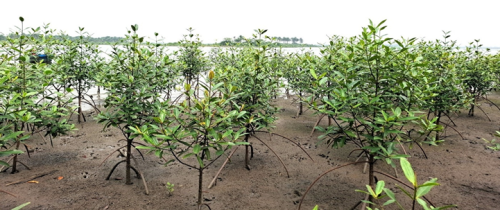
Plate 1 – Restored mangrove saplings in Bomu at 18 months
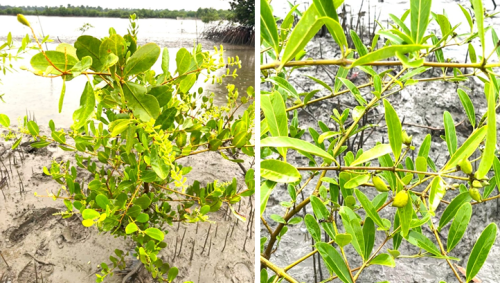
Plate 2- White and black mangrove saplings with propagules (seeds)
The gradual return of some faunal species that had long been locally extinct or had not been seen in the area before restoration is becoming increasingly apparent. Data derived from monitoring activities show that key biodiversity, such as crabs, periwinkle, oysters, dogwhelk, shrimps, and fin fish, has begun to return to previously devoid areas. Fishing, predominantly periwinkle picking, has resumed in the restored creek (Plate 3).
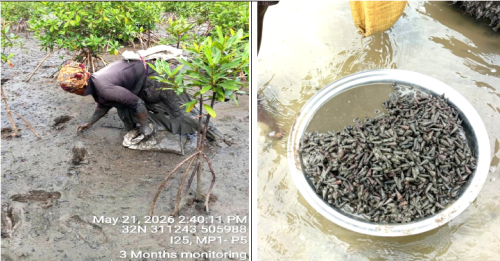
Plate 3 – A lady picking periwinkles and her harvest.
Furthermore, an increase in avian fauna is also being observed and recorded within the restored areas. Consequently, HYPREP has begun a bi-monthly bird survey and a monthly polychaete assessment to document the diversity of birds and marine worms, respectively, across the Ogoni mangrove wetland (Plate 4)
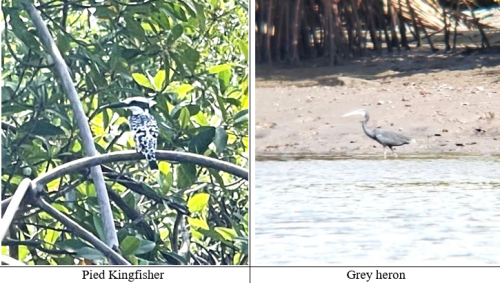
Plate 4 – Example of bird species spotted at the newly designated Ogoni mangrove wetland Ramsar site during a bird watch survey
In the same vein, monthly fish stock assessments have been used to study the effects of mangrove restoration on fisheries. There is evidence of substantial increases in fish catch, as well as the capture of new fish species not captured during the pre-restoration fish stock assessment and now being caught post-restoration. There is also evidence of progressive temporal increase in the size and abundance of fish caught (Plate 5).
A major milestone and one of the legacy gains of the Ogoni mangrove restoration is the designation of the Ogoni mangrove wetland as a Ramsar site of international importance in March 2026 (Ramsar site no. 2593). This fulfils one of the recommendations of the United Nations Environment Programme (UNEP 2011) report on the Environmental Assessment of Ogoniland. HYPREP has begun developing a sustainable management plan to achieve the wise use of resources and protect the ecological character of the designated wetlands.
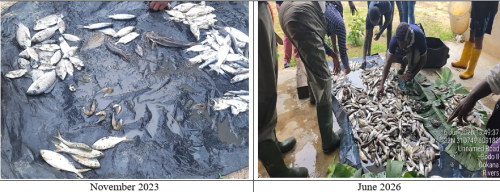
Plate 5 – Fish caught during the fish stock assessment survey before and after restoration
HYPREP has integrated lessons learned from Phase 1 in Phase 2 of mangrove restoration planning and execution. The pre-mobilisation exercise for the Phase 2 project includes swim testing and medical examinations for 840 community workers who will work at 438 hectares of delineated restorative planting sites. All community workers have been trained for the International Maritime Organisation (IMO) level 1 certification (Plate 6).
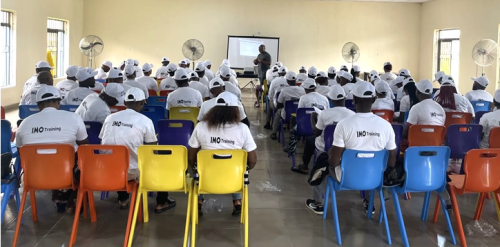
Plate 6 – IMO certification training for HYPREP phase 2 mangrove restoration project
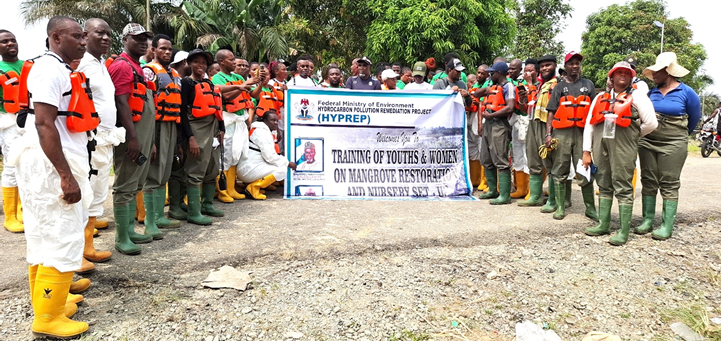
To ensure an adequate supply of quality seedlings and optimize livelihood benefits, HYPREP has also trained 70 local youths and women in mangrove nursery management and provided them with grants to establish nurseries (Plate 7 & 8). Recall that 90 mangrove vanguards were trained and empowered to establish nurseries during the Phase 1 mangrove restoration. The mangrove vanguards continue to manage the nurseries until the seedlings are ready for transplanting. HYPREP, in turn, ensures that the restorative planting contractors purchase vanguards’ seedlings at a competitive price. Each Vanguard is allocated 9000 mangrove seedlings for supply. Like the first cohort of vanguards during the Phase 1 project, this structured programme enables young men and women across targeted communities to become seed-preneurs, directly empowered, both technically and financially.
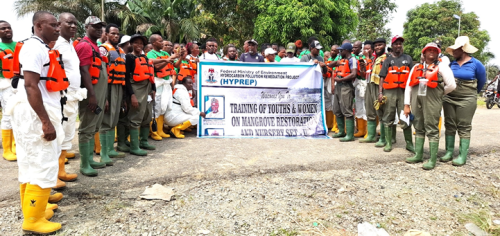
Plate 7 – After a field training session for the Phase 2 mangrove vanguards.
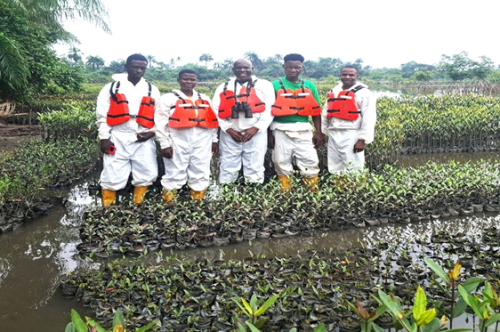
Plate 8 – Nurseries established by the second cohort of HYPREP-trained mangrove Vanguards
Ownership, Stakeholders, Inclusion, and Partners
Whereas the mangrove restoration in Ogoniland is an initiative of the Federal Government of Nigeria through HYPREP, it is designed and implemented to be wholly locally owned. Women make up a significant part of the restoration workforce and are immediate beneficiaries of the recovering biodiversity.
Policy Support and Sustainability
HYPREP’s community and science-based approach to mangrove restoration has begun to fill policy and data gaps at a national level. Although mangrove restoration has been a part of Nigeria’s nationally determined contributions (NDCs) since before 2020, there has been limited data on existing trends and what is achievable in terms of a turnaround. The narrative is changing; HYPREP has, within a short period, used data generated to provide clear, detailed trajectories of the impacts of its work and the prospects for scaled interventions.
HYPREP’s practical community-level experience will also inform broader plans to halt mangrove loss in the Niger Delta and reverse it through effective participatory restoration and conservation. The sustainability of HYPREP’s mangrove restoration is underpinned by building an enduring knowledge legacy of sustainable mangrove management, broad stakeholder participation (whole community framework), the livelihood impacts and other ecosystem services of biodiversity recovery, and the emergence of a national Carbon Markets Policy with the potential to enable restoration communities to earn carbon credits.
Address No. 8, Ken Saro Wiwa Road, Formerly Stadium Road, Port Harcourt, Rivers State, Nigeria
Website: hyprep.gov.ng, Email: info@hyprep.gov.ng, Tel: +234 816 825 2624